
 Photoshop
 Maya
Maya ZBrush
 Houdini
 Substance Painter
 Blender
 Arnold
 Nuke
Nuke KeyShot
 V-Ray
V-Ray Marvelous Designer
 Mari
Mari Marmoset Toolbag
 Substance Designer
 3ds Max
 Redshift
 3D Coat
 Lightroom
 Faceform Wrap
 After Effects
 Octane Render
 Speed Tree
 Daz3D
Daz3D Reality Capture
 Agisoft Metashape
 Modo
Modo Fusion
 Gravity Sketch
 Gaea
Gaea Premiere
 Cinema 4D
 Procreate
 Katana
 Quixel DDO
 Mudbox
 Mixamo
 SketchBook Pro
 SketchUp
 Adobe Medium
 Clip Studio Paint
 Natron
 Quixel Bridge
 Quixel Megascans
 Quixel Mixer
 Substance 3D Modeler
 World Creator
 Yeti
Yeti Ziva VFX
 Massive
 Materialize
 TreeIt
 Ornatrix
 PreForm
 SynthEyes
 Corel Painter
 QuickTime
 StoryboardPro
 xNormal
 animBot
 Unity
Unity ReCap
ReCap MeshMixer
 Gaffer
 DaVinci Resolve
 World Machine
 Krita
Krita









11 Lessons
Josh Herman introduces his workshop, which demonstrates a professional character redesign workflow that emphasizes iteration and flexibility between multiple software platforms. His approach demonstrates how 3D artists can tackle the challenge of reimagining iconic characters by combining digital sculpting, rendering, and traditional digital painting techniques in a cyclical process to achieve a satisfying final result.
Duration: 52s

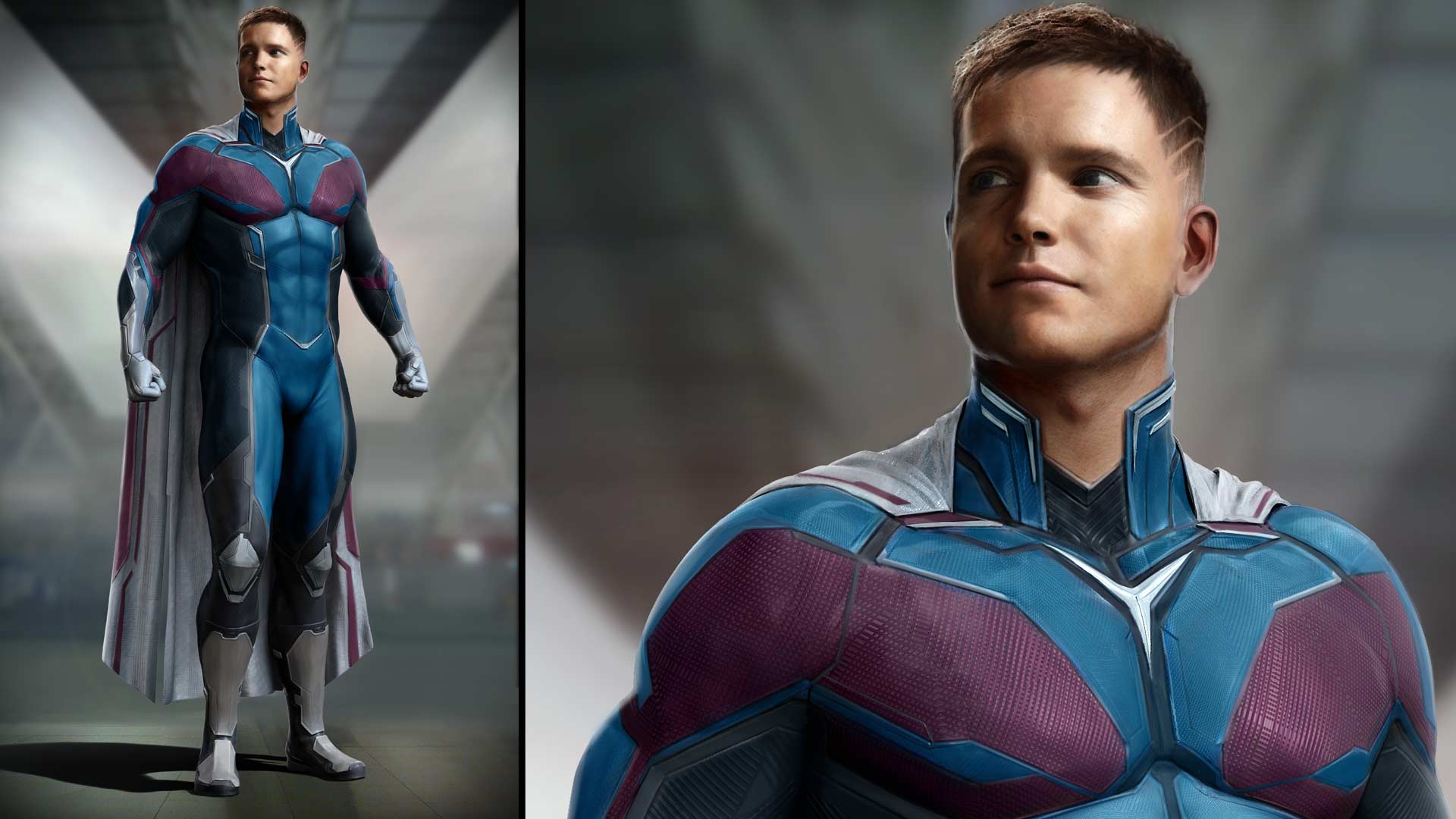
Josh's redesign project demonstrates how to approach updating an iconic yet minimalist character by adding layers of complexity without losing the core identity. He successfully balances the challenge of making the Silver Surfer distinctive while respecting his essentially simple design through thoughtful integration of technological elements, elegant curves, and carefully chosen reference materials. His emphasis on maintaining instant visual recognition while introducing fresh design elements shows a sophisticated understanding of character design principles for comic book heroes.
Duration: 11m 58s

Josh’s workflow demonstrates a streamlined approach to digital sculpting that prioritizes efficiency and creative flow over technical complexity. By keeping models unified and treating ZBrush sculpts as sketches rather than finished pieces, he shows how to iterate quickly and create flowing, organic forms without the burden of managing hundreds of sub-tools. His approach is particularly valuable for artists who want to move quickly from concept to final rendered piece.
Duration: 5m 21s

This Silver Surfer project demonstrates the importance of patience and iteration in character design, particularly when working with flowing, elegant forms. Josh's willingness to experiment with different techniques, continuously evaluate progress, and spend extra time on design rather than rushing to detail results in a cohesive character that successfully balances human anatomy with sleek, mechanical aesthetics. He explains why it's critical to maintain visual flow and rhythm across an entire character, which often requires more time and iteration than anticipated, but is essential for achieving a polished, professional result.
Duration: 36m 15s

This lesson demonstrates how rendering and post-production work together to create compelling character presentations. Josh emphasizes that lighting is as important as material selection when working with reflective surfaces and that experimentation with multiple renders provides valuable options for compositing. His process shows how technical rendering skills combined with painterly Photoshop techniques can transform a 3D sculpt into a finished concept piece, while also highlighting the importance of making design choices that maintain character uniqueness and avoid unwanted associations with existing intellectual properties.
Duration: 27m 36s

This lesson establishes an efficient retopology workflow in Maya that prioritizes speed and clarity during the initial blocking phase. By using visual aids such as custom materials and normal-based edge display, along with Maya's surface-constraint snapping tools, artists can quickly establish major topology flow without getting bogged down in premature optimization. Josh's pragmatic approach of allowing triangles early on enables faster iteration before refining to clean quad topology later.
Duration: 9m 5s

This retopology lesson prioritizes clean quad topology and proper edge flow while maintaining artistic judgment about form and surface quality. Josh explains why treating high-resolution sculpts as guides rather than strict templates enables artists to refine geometry during retopology. By building connected elements as unified pieces before separation, the final model achieves better visual cohesion and more natural surface transitions.
Duration: 10m 19s

This lesson showcases Josh's iterative design process, where color and value are used strategically to enhance sculptural forms and guide viewer attention. His flexible workflow between 3D rendering software and 2D paintover techniques allows for rapid experimentation and decision-making. His approach demonstrates how graphic design principles can strengthen 3D character design by creating visual flow that complements the underlying form, while the paintover process simultaneously serves as both a presentation tool and a planning document for further development.
Duration: 8m 9s

This lesson demonstrates an efficient approach to creating material variation on a character model by using mesh separation rather than complex texturing. Josh's focus on visual flow and strategic color placement transforms the character design, demonstrating how a thoughtful two-tone scheme can enhance form definition and create cohesion across body parts. His method is particularly effective for metallic characters where shader properties matter more than detailed texture maps.
Duration: 11m 58s

This lesson demonstrates the iterative nature of 3D rendering and compositing, showing how lighting setups must be tailored to specific camera angles and how extensive post-production work helps integrate rendered elements with photographic backgrounds. Josh's process emphasizes the importance of testing different compositions and using color-grading techniques to make separate elements feel cohesive within a final space-themed scene.
Duration: 11m 15s

In this final lesson, Josh recaps his process and invites continued connection through his website and social media profiles.
Duration: 47s

Primary tools
For this workshop you’ll need:


Skills Covered
Who’s this Workshop for?
This workshop is intended for artists who want to design and refine characters using a flexible, multi-software workflow that supports both creativity and production needs. Artists with foundational knowledge of ZBrush, Maya, and Photoshop will gain the most from Josh Herman's integrated approach to character redesign.
Artists working in games, animation, or freelance character design will benefit from the emphasis on maintaining creative momentum while solving technical challenges. The workflow demonstrates how switching tools strategically can help unblock ideas, refine designs faster, and arrive at stronger visual results without getting stuck in a single application.
Learning Outcomes
On completing this workshop, artists will have mastered a professional multi-software workflow for character redesign that maximizes each program's unique strengths.
Key skills include:
- How to establish initial character blocking and design foundations using ZBrush sculpting techniques.
- How to utilize Keyshot and Photoshop integration for rapid visual development and look exploration.
- How to create clean, production-ready geometry through efficient Maya retopology workflows for sculpted models.
- How to maintain creative momentum by strategically switching between software tools during design phases.
- How to overcome creative roadblocks using multi-software approaches that leverage each program's strengths.
- How to produce professional presentation renders in Keyshot with polished Photoshop finishing touches.


